

(800) 337-4002
call for your free personal
injury case consultation
Available 24/7
injury case consultation
Available 24/7

While helmets are always recommended for motorcycle drivers and passengers, Kentucky law only applies to select demographics. The state currently does not have universal helmet laws for all riders, but it requires helmets for those under 21. New license holders, less than a year, and those using a learner’s permit are also legally required to wear a helmet.
If you are concerned about how helmet laws may apply to your situation, contacting a Lexington motorcycle accident lawyer from Gary C. Johnson P.S.C. can help get your questions answered.
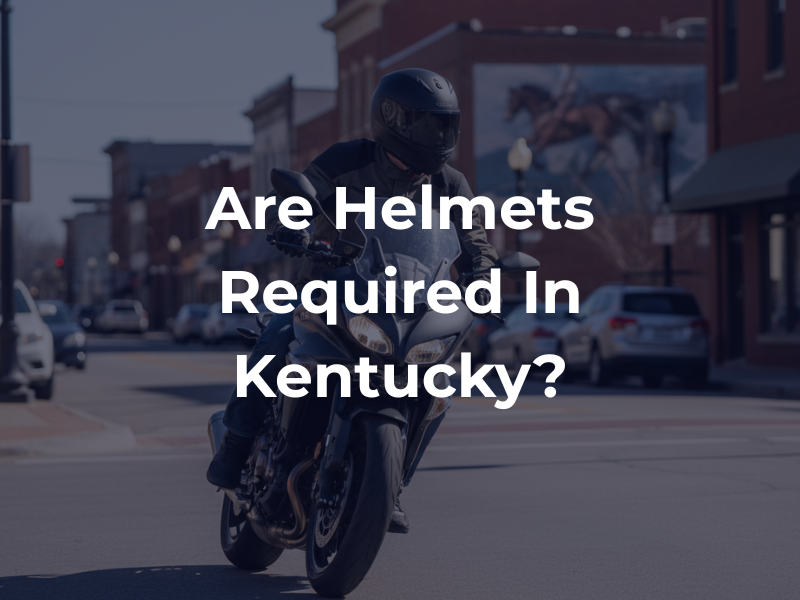
Kentucky was under a universal motorcycle helmet mandate for all riders for decades, but this was repealed in 1998. Under the current laws established in Kentucky Revised Statutes (KRS) § 189.285, age and licensing experience are the primary factors for helmet requirements. The following groups are legally required to wear a DOT-approved helmet:
If you are over the age of 21 and have held a valid license for more than 1 year, you are not required to use a helmet by law. Using a helmet is still recommended as it can significantly protect you both physically and legally in the case of an accident.
Beyond fines, helmet law violations can be used as evidence of negligence in a civil lawsuit. In motorcycle accident cases handled by a Lexington personal injury lawyer, insurers often use helmet violations to reduce or challenge compensation.
Kentucky follows a pure comparative negligence system. This means an injured rider can still recover compensation even if they are partially at fault for their injuries. However, the total compensation is reduced by the rider’s percentage of fault.
If a motorcyclist was not wearing a helmet, especially when legally required to do so, insurance companies may argue that the rider contributed to the severity of their injuries. This is common in cases involving:
For example, if a jury finds that helmet non-use contributed 30% to the severity of the injuries, the compensation award would be reduced by 30%. A Lexington motorcycle accident attorney can challenge these arguments and work to minimize fault attribution.
The Kentucky Department of Transportation (DOT) tracks the impact of helmet usage on road safety. Following the repeal of the universal helmet law in 2000, Kentucky saw a reported 50% increase in motorcycle fatalities. DOT-approved helmets are considered to reduce the risk of head injury in an accident by 69% and reduce risk of fatalities by 37%.
In a recent reporting year, Kentucky recorded over 1,400 motorcycle accidents. Motorcycle accidents frequently result in traumatic brain injuries (TBI) and catastrophic injuries. If you were injured recently, you may be able to file for compensation for your required medical care and lost wages.
If you were injured in a motorcycle accident, whether or not a helmet was worn, you may still have a valid claim. A Lexington personal injury lawyer can evaluate how helmet laws, fault, and insurance tactics affect your case and help protect your right to compensation.