

(800) 337-4002
call for your free personal
injury case consultation
Available 24/7
injury case consultation
Available 24/7

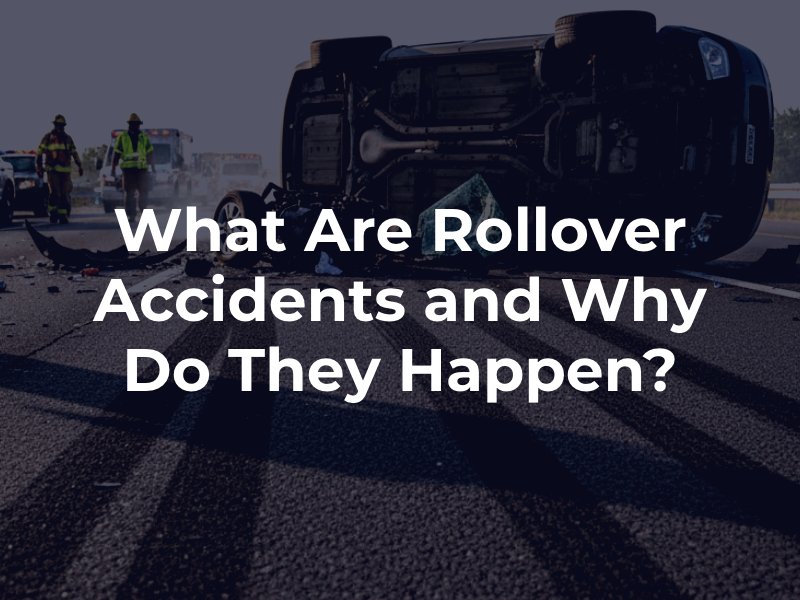
Rollover accidents are crashes in which a vehicle flips onto its roof or side. Sometimes, the vehicle rolls several times. The vehicle and its occupants experience an initial impact, followed by repeated impacts as the vehicle rolls. Additionally, vehicle occupants may be fully or partly ejected from the vehicle during these crashes. As a result, rollover accidents often cause severe injuries or fatalities.
If you or a loved one has been involved in a rollover, working with a Lexington car accident lawyer can help you understand your legal rights and options for compensation.
The National Highway Traffic Administration (NHTSA) has conducted extensive research into rollover crashes. It observes that these accidents are complex events involving interactions between drivers, road conditions, vehicles, and the environment. The NHTSA distinguishes between “tripped rollovers” and “untripped rollovers.
In tripped rollover accidents, a vehicle begins to roll after striking a curb, guardrail, the soft shoulder of a road, or some other obstacle at the edge of a road. Most of the 8% of vehicle accidents that result in rollovers are tripped rollovers.
Untripped rollovers are less common than tripped rollovers. They occur when a vehicle’s speed, momentum, and the way a driver steers cause a rollover without it striking some other object. Excessive speed and swerving can cause untripped rollovers, particularly when a vehicle’s design makes it top-heavy.
According to the NHTSA’s findings, most rollover crash fatalities occurred in single-vehicle rollover accidents. However, some fatalities were associated with rollover crashes in which two or more vehicles were involved.
As previously noted, several factors may simultaneously contribute to any rollover crash. This is particularly true in single-vehicle rollovers, where driver behavior, vehicle-related factors, and environmental conditions can combine, resulting in tragic consequences.
Driver behaviors contributing to a rollover crash include:
Vehicle-related factors include:
Environmental factors associated with rollovers may include:
Finally, rollovers can result from collisions between vehicles, particularly in T-bone (side-on) accidents at dangerous intersections or when an impact forces a vehicle into an obstacle like a curb or guardrail.
If you have been seriously hurt or have lost a loved one in a rollover accident, you may be able to claim compensation to help you rebuild your life. Our Lexington personal injury lawyer knows how to investigate complex accidents like rollovers. Based on their findings, they can determine which parties may be at fault and whether you may be eligible for compensation.
After a rollover accident, any compensation you can recover may be important to your long-term financial security. A case evaluation from Gary C. Johnson P.S.C. Attorneys at Law is cost and obligation-free. Call us today.